
HV10667
Impruneta
Florence Countryside and Chianti
Weddings 2027
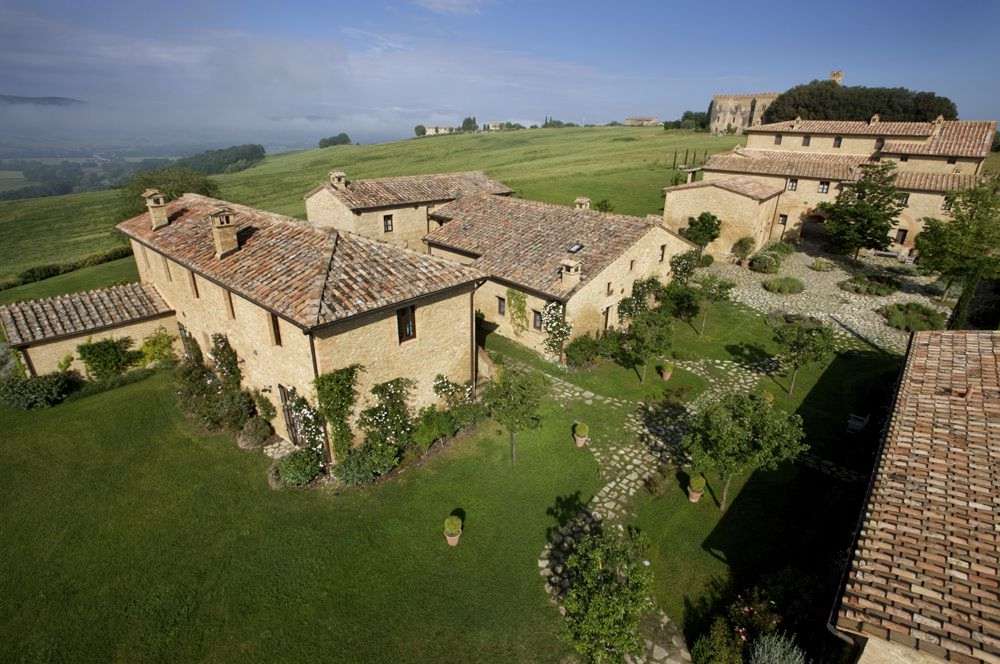
A Renaissance hamlet, all yours
The UNESCO valley of cypress roads, Brunello and Renaissance villages.
Southern Tuscany offers two of Italy's great treasures within an hour of each other. Siena is a Gothic city of brick palaces and steep lanes gathered around Piazza del Campo, while the Val d'Orcia unfolds in gentle hills, lone cypresses and Renaissance towns that UNESCO recognises as a model landscape. Add Brunello and Vino Nobile cellars, and the case for a villa here is compelling.
The region suits travellers who enjoy beauty at a measured pace: photographers chasing dawn light over the hills, wine lovers touring Montalcino and Montepulciano, couples seeking thermal springs and families who want space. Days unfold slowly, with lunch in a hilltop piazza and sunsets that colour the whole valley.
Ideal for: Wine lovers, Weddings, Photography and slow travel · Slow, scenic and gastronomic
closest airport to Siena
small Umbrian airport, convenient for the southern Val d'Orcia
wide choice of European routes
best for intercontinental flights to the southern valley
alternative for long haul connections
We arrange private transfers, drivers, boats and helicopters for every villa.
A city of contrade, Gothic palaces and pedestrian lanes, best for those who want culture and restaurants at the door.
The ideal Renaissance town planned by Pope Pius II, perched above the Val d'Orcia with views from its walls.
A fortified hilltown entirely devoted to Brunello, surrounded by some of Italy's most prestigious estates.
A long, steep Renaissance town with grand palazzi and cellars carved deep into the hill.
A central, low key base close to the thermal square of Bagno Vignoni and the most photographed hills.
Bare, clay hills between Siena and the Val d'Orcia, almost lunar in summer and remarkably peaceful.
Positions are approximate: the exact address is shared once your stay is confirmed.
The fan shaped square slopes down to the Palazzo Pubblico, where Lorenzetti's frescoes of Good and Bad Government fill an upper hall. Climb the tower for a sweeping view over rooftops and countryside.
Striped marble, a pulpit by Nicola Pisano and the Piccolomini Library frescoed by Pinturicchio make this one of Italy's great churches. The inlaid marble floor is uncovered only for limited periods each year.
Rebuilt in the fifteenth century as an ideal town, Pienza was inscribed by UNESCO in 1996. Walk the panoramic lane along its southern walls at sunset.
Recognised by UNESCO in 2004, the valley's rolling wheat fields and cypress lined roads inspired Renaissance painters. The Cappella della Madonna di Vitaleta near San Quirico is its best known postcard.
A hamlet whose main square is a great stone basin of steaming thermal water. Bathing in it is not allowed, but nearby spas and the free pools below the village are open to all.
A luminous Romanesque abbey in a valley below Montalcino, built of travertine and alabaster. Its setting among olive groves is unforgettable at dusk.
Crowned by the Palazzo Comunale and the cathedral, the square sits at the highest point of town. Beneath the surrounding palaces lie historic wine cellars open for tastings.
A Benedictine monastery in the Crete Senesi with a cloister frescoed by Luca Signorelli and Sodoma with scenes of Saint Benedict's life.
Visit cellars around Montalcino and taste Brunello alongside Rosso di Montalcino, guided by a sommelier or the producers themselves.
Spend a morning in the warm waters of Bagno Vignoni or the natural white limestone pools of Bagni San Filippo.
Meet cheesemakers and taste pecorino at different ages, from fresh and milky to aged in ash or walnut leaves.
Follow a local photographer to the classic viewpoints as mist settles in the valleys at dawn.
Explore the white roads between Pienza, Montichiello and San Quirico at your own rhythm.
In autumn, follow a trufflehunter and his dog through the woods around San Giovanni d'Asso.
Free natural thermal pools and a vast white calcareous formation known as the White Whale.
Warm water cascades into open air pools in the old mill park below the village.
An extinct volcano rising to 1,738 metres, with beech forests for summer walks and snow in winter.
A stretch of the ancient pilgrim route crossing the valley's most open landscapes.
A protected area of eroded clay badlands near Pienza, home to unusual flora and birdlife.



Thick hand rolled pasta, served with garlicky tomato sauce or simply with breadcrumbs.
Sheep's cheese from the Val d'Orcia pastures, sold in every shade of maturity.
Siena's dense, spiced cake of honey, almonds and candied fruit, a medieval recipe.
Soft, crackled almond biscuits dusted with icing sugar, a Sienese speciality.
Free range native pork, made into prized salumi and slow roasts.
The rare tartufo bianco found in the clay hills in autumn, shaved over fresh pasta and eggs.
A deep, long lived pure Sangiovese, released only after extended ageing.
A refined Sangiovese red from the slopes around Montepulciano, aged in cellars beneath the town.
The younger, fresher sibling of Brunello, approachable from early on.
A small appellation of Sangiovese based wines from the valley itself, often from boutique producers.
The Renaissance capital, easily combined with a stay in Siena.
Wine estates and medieval villages on the road north.
An Etruscan hilltown above the Val di Chiana.
A dramatic Umbrian city on a tufa cliff with a dazzling cathedral facade.
A wide, tranquil lake with islands and lakeside villages in Umbria.
May to June and September to October, with the harvest in autumn. Summer is hot and dry.
Green wheat fields and poppies make April and May the most photogenic months. Temperatures are mild and the roads quiet.
The hills turn gold after the harvest of the wheat in June, and evenings are made for dinners outdoors. Days can be very hot, so a villa with a pool is precious.
Vineyards glow, the grape harvest is under way and truffle season begins. September and October are among the most rewarding months.
Quiet, crisp and often misty, with thermal baths at their most inviting. Some country restaurants close between January and March.
Bars: hours of sunshine a day. Above: average daytime high. Shaded: the best months.
| Month | Jan | Feb | Mar | Apr | May | Jun | Jul | Aug | Sep | Oct | Nov | Dec |
|---|---|---|---|---|---|---|---|---|---|---|---|---|
| Daytime high, °C | 11 | 13 | 16 | 20 | 24 | 29 | 32 | 32 | 27 | 22 | 16 | 11 |
| Night low, °C | 2 | 3 | 5 | 8 | 12 | 16 | 18 | 19 | 15 | 11 | 6 | 3 |
| Sunshine, hours a day | 3 | 4 | 5 | 6 | 8 | 9 | 10 | 9 | 7 | 5 | 3 | 3 |
| Rainy days | 8 | 7 | 7 | 9 | 8 | 5 | 3 | 4 | 6 | 9 | 10 | 10 |
| Dry days | 24 | 21 | 24 | 21 | 23 | 25 | 28 | 27 | 24 | 22 | 20 | 21 |
Air: averages 1991 to 2020, Florence Peretola weather station. Dry days have less than 1 mm of rain.
Tell us your dates and the group: we reply with availability and the full price, usually within one working day, and arrange transfers, chefs and boats.
Siena is ideal for a few nights of city culture, while the Val d'Orcia offers space, views and wine country. Many guests combine a villa in the valley with day trips into Siena, about an hour away.
It is held twice a year, on 2 July and 16 August, in Piazza del Campo. Trials and processions take place in the days leading up to each race.
Perugia (PEG) is about 1h15 from Montepulciano and Florence (FLR) about 2h from Pienza. Rome Fiumicino (FCO) is around 2h30 away and offers the most international connections.
Yes, it was inscribed in 2004 as a cultural landscape. Pienza's historic centre and Siena's historic centre are separate UNESCO sites.
A week allows unhurried visits to Pienza, Montalcino, Montepulciano and Bagno Vignoni, plus a day in Siena. Three or four days covers the essentials.
Register as a trade partner for your private area, villas of the month and quotes in one place.